


Poconé, a town perched on the edge of Brazil’s Pantanal, is more than a dot on a map. It is a place where history, ambition, and the environment collide. From the 18th-century gold rush to modern corporate and artisanal mining, Poconé’s story is intertwined with the pursuit of gold, the struggle for survival, and the fragile ecosystems of the world’s largest tropical wetland.
This article traces the history, socio-economic impact, and environmental consequences of gold mining in Poconé, exploring how human desire reshapes both land and culture.
The Pantanal: A Living Map
The Pantanal is a landscape of extremes. Seasonal flooding turns the lowlands into shallow inland seas, while the dry season exposes red-clay soils, forests, and savannas. Indigenous peoples, including the Bororo and Guató, historically navigated this dynamic terrain, following rivers, wetlands, and trails attuned to the movements of water, fish, and wildlife. Gold was not a goal; the land itself sustained life.
When the Portuguese began exploring Brazil’s interior, they saw a different map — one measured in resources and mineral potential rather than survival. By the 18th century, rumors of gold flowing westward from Minas Gerais reached the Pantanal’s southern reaches, attracting adventurers, soldiers, and settlers into the unknown. Learn more about the Brazilian gold rush.

Gold Fever Spreads West
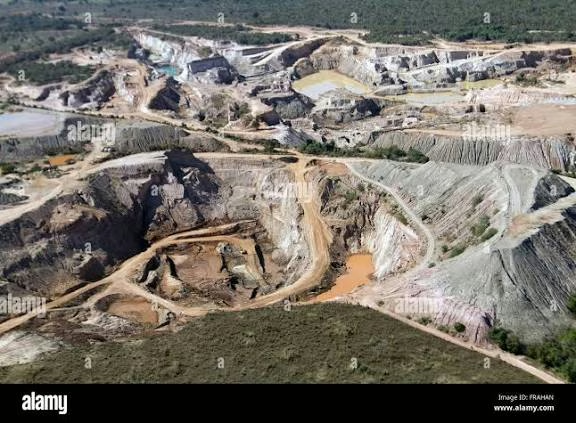
The gold rush began in Minas Gerais during the late 1600s, transforming the region into Brazil’s economic hub. Conflicts, such as the War of the Emboabas, pushed Paulistas and explorers further west. By the early 1700s, bandeirantes reached Mato Grosso, discovering auriferous sands near Cuiabá. This discovery catalyzed migration into what would later become Poconé, although the area remained sparsely populated. Learn more about Mato Grosso’s colonial history.
Placer mining along creeks and rivers became the primary extraction method. Miners relied on simple tools: wooden sluices, pans, and later small pumps. Life was harsh. Seasonal floods, tropical diseases, and conflicts with Indigenous communities made survival precarious. Many miners struck small veins; some found fortune; many returned home empty-handed. Yet the myth of gold endured, becoming a part of local folklore.

Early Geological Surveys
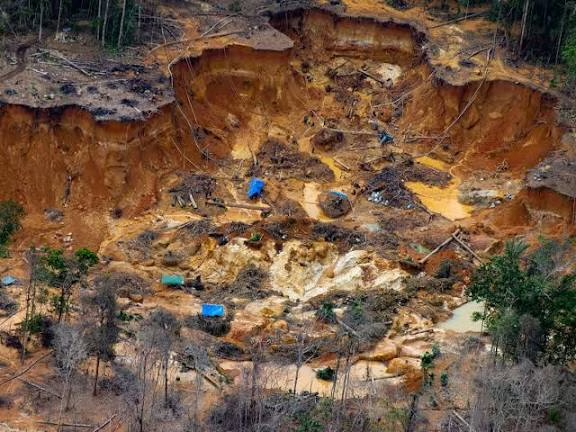
By the 1970s and 1980s, modern geologists arrived in Poconé, conducting surveys for the Brazilian National Department of Mineral Production (DNPM) and universities. They found:
- Abandoned pits from previous centuries
- Placer deposits with potential for extraction
- Geological structures favorable for gold-bearing veins
These findings drew both formal mining companies and informal artisanal miners, or garimpeiros, reigniting the cycle of human settlement and extraction. Learn more about DNPM mineral surveys.

The Garimpeiro Republic: Chaos and Opportunity
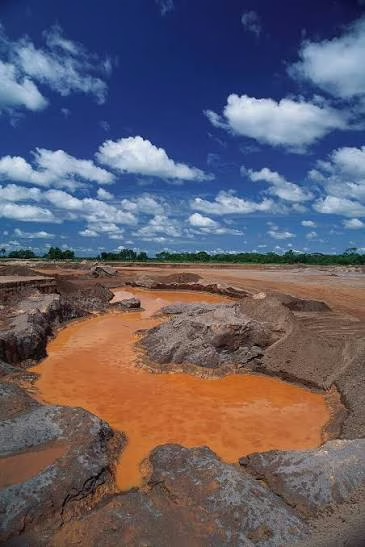
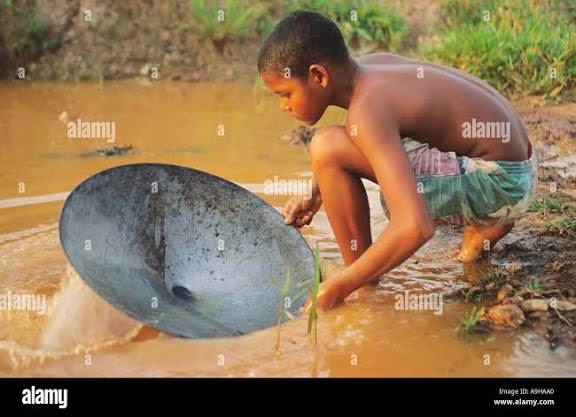
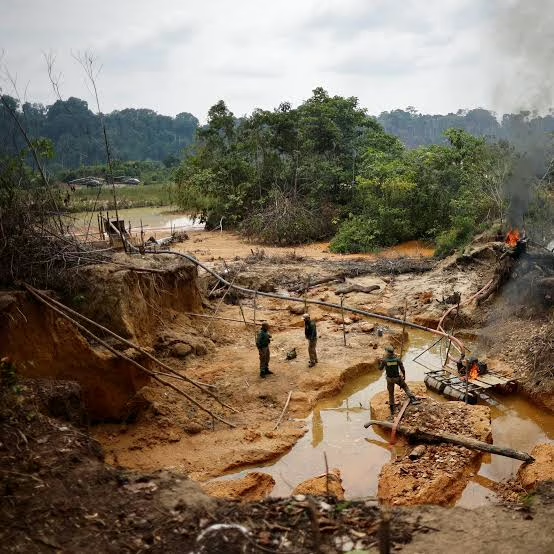
The late 1980s saw thousands of garimpeiros descend on Poconé. They set up improvised camps along creeks and tailings, using hoses and sluices to extract gold from alluvial sediments. Engines roared day and night; families, merchants, and fortune-seekers swarmed the town.
This informal “Garimpeiro Republic” thrived on improvisation, governed by custom rather than law. Conflicts with formal mining companies arose but often dissolved into negotiations or shared labor. The economy boomed: stores, mechanics, and bars thrived. Yet the boom was unsustainable; shallow deposits soon declined, accidents increased, and mercury — essential to gold processing — became a growing concern. Read more about artisanal mining in Brazil.

Mercury and Environmental Consequences
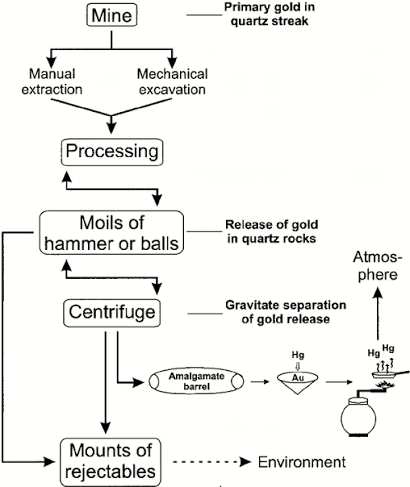
Mercury (azougue) is essential for artisanal gold extraction, forming an amalgam with gold. Its use, however, carries severe environmental and health risks. In the Pantanal:
- Mercury accumulates in sediments and fish
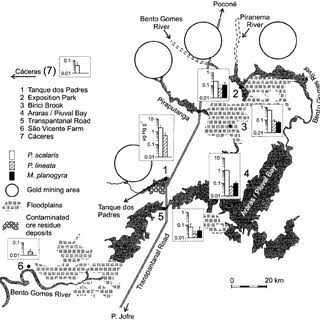
- Floodwaters redistribute toxins across kilometers
- Local populations experience tremors, memory loss, and other health effects
Studies indicate that the wetlands’ flood cycles exacerbate mercury contamination, threatening both wildlife and human communities. Learn about mercury contamination in the Pantanal.

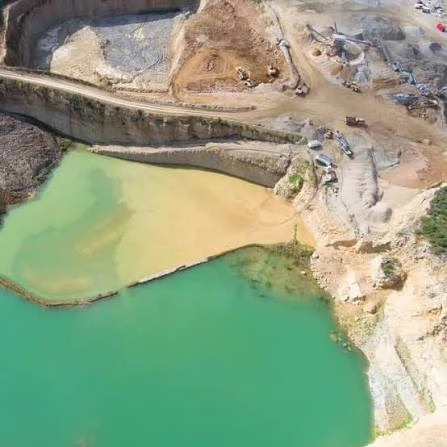
Decline and Diversification: 1990–2010
By the 1990s, Poconé experienced a slow decline in mining activity. Some garimpeiros migrated to new frontiers in northern Brazil; others turned to cattle ranching or tourism. The town’s economy diversified, but gold remained a fallback. Seasonal mining persisted, and global gold price increases in the 2000s encouraged partial revival.
Tourism began showcasing the Pantanal’s wildlife: jaguars, capybaras, caimans, and hundreds of bird species. Eco-lodges and guided tours brought new income streams, though environmental vigilance remained critical. Explore tourism in the Pantanal.

Corporate Return and Formalization
The 2010s marked a new era of corporate investment. Companies conducted deep drilling, reprocessed old tailings, and established formal mining operations. Environmental licensing, impact assessments, and regulatory compliance became mandatory.
These developments brought:
- Jobs and infrastructure
- New economic opportunities
- Conflicts with informal miners over land and resources
The return of corporate mining highlighted the tension between economic development and environmental protection. Corporate mining regulations in Brazil.

Illegal Mining Networks Persist
Despite corporate regulation, illegal mining continues:
- Remote camps exploit unmonitored areas
- Mercury and diesel pumps are widely used
- Satellite imagery reveals widespread clandestine operations
Illegal miners often operate economically within the local community, selling gold through informal networks and supporting local commerce. Enforcement is sporadic due to the vast and difficult terrain. Read about illegal gold mining in Brazil.
Environmental Flashpoints
Poconé’s environment faces ongoing threats:
- Mercury contamination in water and fish
- Riverbank erosion
- Habitat loss for aquatic and terrestrial species
Flood cycles worsen contamination, redistributing sediments across the wetlands. Both corporate and artisanal operations contribute, but regulatory frameworks and conservation initiatives aim to mitigate long-term damage. Pantanal conservation studies.
Poconé Today
Modern Poconé balances multiple identities:
- A hub for corporate mining
- A home for informal artisanal miners
- A gateway for Pantanal tourism
Gold continues to shape the town culturally, economically, and socially. Environmental awareness is growing, but challenges remain. The town stands at a crossroads: managing economic ambitions while preserving the delicate Pantanal ecosystem. Pantanal conservation and development.

Timeline of Gold Mining in Poconé
| Year | Event | Significance |
|---|---|---|
| 1719 | Gold discovered near Cuiabá | Bandeirante exploration expands west |
| 1748 | Mato Grosso captaincy formalized | Crown oversight begins |
| 1830s | Early placer mining camps | Semi-permanent settlements emerge |
| 1970s | DNPM surveys | Modern exploration begins |
| 1980s | Garimpeiro influx | Informal gold rush |
| 1990s | Decline | Diversification of local economy |
| 2010s | Corporate return | Formalized operations and renewed environmental focus |
Glossary of Terms
- Garimpeiro: Artisanal or informal gold miner
- Placer deposit: Gold accumulation in riverbeds or sediments
- Sluice: Channel for washing gold-bearing sediment
- Laterite: Red clay soil common in tropical regions
- Mercury (Azougue): Toxic metal used to extract gold
- Pantanal: Largest tropical wetland, spanning Mato Grosso
Conclusion
Poconé’s story is a microcosm of human ambition, environmental consequence, and resilience. From 18th-century gold fever to modern corporate and illegal mining, the town embodies the cycles of boom and bust, risk and reward, hope and caution. Its future depends on balancing economic development with the conservation of one of the planet’s most unique ecosystems.
Gold continues to shine — both literally in the red soils and metaphorically in the town’s history and culture. How Poconé navigates its next decades will determine whether it becomes a model of sustainable coexistence or a cautionary tale of exploitation and environmental loss.

References
- Brazilian gold rush – Wikipedia
- War of the Emboabas – Wikipedia
- Mato Grosso – Britannica
- DNPM official mineral surveys
- Artisanal and small-scale gold mining – ResearchGate
- Mercury contamination in Pantanal – ScienceDirect
- Pantanal wildlife – WWF
- Corporate mining regulations – IBAMA
- Illegal gold mining – National Geographic
- Pantanal conservation – Conservation International